In the past year, two businesses I have used for years closed. A vet clinic and a plumbing company. Both were busy. Both were well-known in the area. Both owned their buildings and had loyal customers who had been coming back for years. Neither sold. Neither passed to a family member. They just closed.
I don't know the full story behind either decision. But from the outside, both looked like businesses with real value. The kind a buyer would want.
This is the silver tsunami, and it is already here.
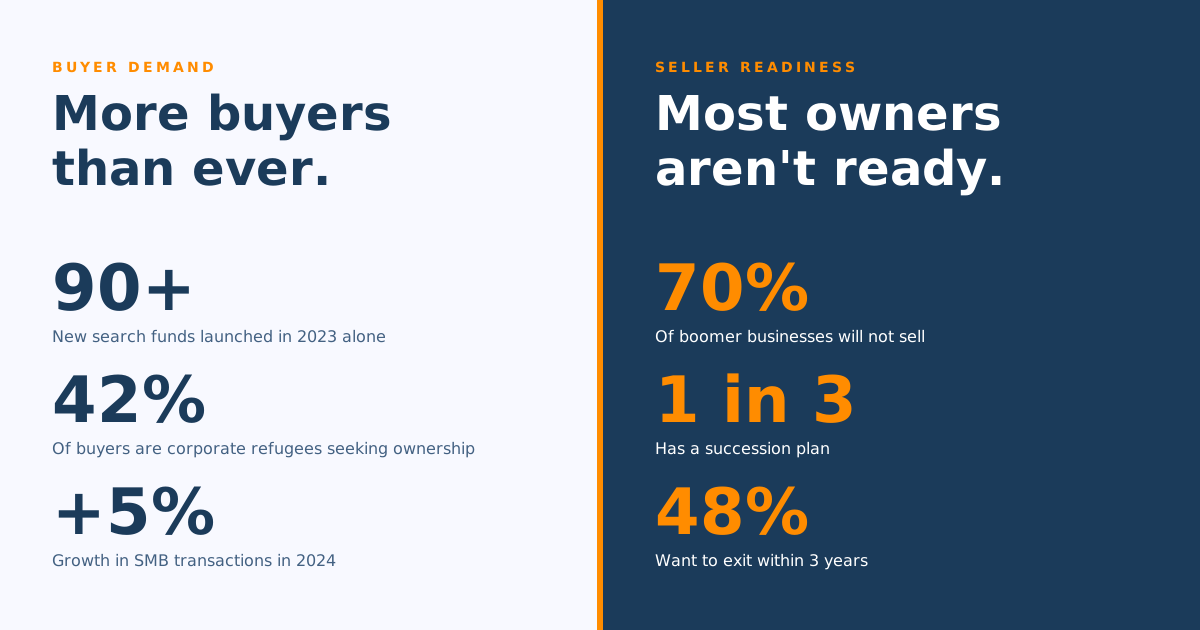
There are roughly 2.3 million small businesses in the United States owned by baby boomers. By 2030, the entire generation will be at or past retirement age. An estimated $10 trillion in business assets will change hands over the next decade. The number that matters most: approximately 70% of privately held businesses listed for sale will not sell.
This is not a buyer problem. That matters, because most people assume it is.
Search funds are at record levels. Stanford's 2024 study found more than 90 new search funds launched in 2023 alone, delivering returns that rival private equity. Corporate refugees, people leaving salaried careers to buy and operate a business rather than start from scratch, now make up 42 percent of active business buyers. Small business transactions increased 5 percent in 2024. Business brokers report more buyers in 2025 than any recent year.
There is capital. There is demand. There are people actively looking for exactly the kind of business that vet clinic or plumbing company represented.
So why are so many of them closing instead of selling?
Most owners don't know their number. And without a number, they can't evaluate what they're being offered. They receive cold emails, LinkedIn messages, letters in the mail from buyers and brokers. It's noise. When you can't distinguish a serious offer from a lowball, the easiest response is to do nothing.
Nearly half of boomer business owners want to exit within the next three years. Less than one in three has a succession plan. The gap between wanting to exit and being ready to exit is where most of this value disappears.
The vet clinic and the plumbing shop may have had more options than they realized. They built real things: loyal customers, established brands, physical assets, recurring revenue. In a strong buyer's market, those are the ingredients that produce a meaningful exit. But timing matters. A business worth $1.2 million today is not necessarily worth $1.2 million in three years if the owner's health changes, a key employee leaves, or the market shifts.
Knowing your number now gives you options. It tells you what you have built. It tells you how to evaluate an offer when one arrives. It tells you where to focus if you want to improve that number before you sell.
If you are a business owner thinking about this, even vaguely, even five years out, the time to know your number is now.