In February 2026, Blackstone paid $2.5 billion for Champions Group, formerly known as Service Champions, a multi-trade HVAC, plumbing, and electrical platform with 1,800 technicians and 150,000 active maintenance members. If you own a service business and saw that headline, I understand why it feels relevant. Here is why it probably is not: Champions had roughly $140 million in EBITDA, operated across major metro markets, and had professional management in place before Blackstone arrived. That is not a small business. That is a platform built over years of acquisitions. For most owners, the buyer is someone else entirely.
I have been on both sides of this conversation, as a seller and now building tools to help other owners prepare. There are three types of buyers in this market. Each comes with a different price, a different set of expectations, and a different set of risks.
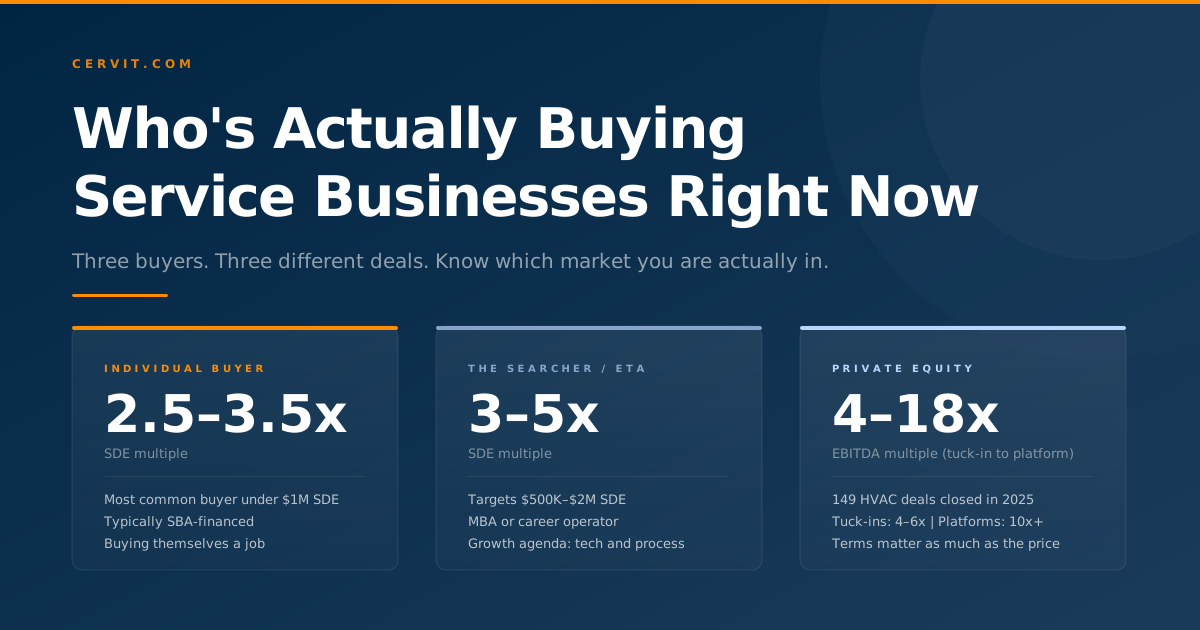
The individual buyer. This is the most common buyer for service businesses under $1 million in SDE. They are buying themselves a job, and they know it. They typically finance with an SBA loan, which means the business needs to cash flow from day one. Multiples run 2.5 to 3.5 times SDE (what is SDE and why does it matter?). What to look for: they are motivated, they intend to operate the business personally, and deals at this level close regularly. What to watch: SBA financing can fall through late in the process, the transition depends heavily on your involvement, and some buyers will need working capital built into the deal structure. One specific risk worth naming: if your customers call you by name, if your vendors deal only with you, if the relationships live with you and not the business, a motivated buyer cannot fix that after closing.
The searcher. Search fund buyers, also called acquisition entrepreneurs or ETA (entrepreneurship through acquisition) operators, are career professionals or newly minted MBAs who raised capital specifically to find and run a business. Their growth agenda usually means one of two things: rolling similar companies together into a larger operation, or identifying specific areas to improve through technology, process, and operational efficiency. They target $500,000 to $2 million in SDE and pay slightly more than individual buyers. You have probably already heard from one: the calls, the emails, the occasional postcard with a photo of their family and a note about your legacy and how great you are. The butter-up is real. So is the interest. What to look for: they bring capital, genuine commitment, and often a perspective on growth that is hard to see from inside your own business. What to watch: most have no industry experience, and the learning curve is real and frothy. What made your business work does not always survive the first year under new management.
Private equity. PE is active in service businesses: 149 HVAC-related transactions closed in 2025 alone, up nearly 13 percent year over year. But there are two very different PE outcomes, and confusing them is expensive. Platform acquisitions, what Blackstone did, go to businesses with institutional scale, deep recurring revenue, and management already in place. Tuck-in acquisitions are a different deal: PE buys your business and folds it into an existing platform, adding your customers, technicians, and territory to a larger operation. These are more accessible but come with lower multiples (4 to 6 times EBITDA) and terms that matter as much as the headline price. Rollover equity means you reinvest a portion of the sale back into the acquiring company rather than taking it as cash, betting the platform grows and you earn more on exit. Earn-outs mean part of your payment is tied to future performance targets, targets you may not fully control once you have signed. Before any PE conversation, get specific answers: Is this a roll-up? What happens to your employees? Does your company keep its name, its community roots, its customer relationships, or does it disappear into a larger operation? These are the right questions to ask.
Knowing your likely buyer shapes everything: how you price the business, what you clean up before going to market, and what you are actually walking away with. If you are starting to think through this, reach out at info@cervit.com. We will give you 30 minutes of our time, you decide the questions.
Sources
- Blackstone acquires Champions Group: Blackstone press release, February 2026
- HVAC M&A transaction volume: Capstone Partners, HVAC Equipment Sector M&A Update, April 2026
- SDE multiples for small service businesses: BizBuySell HVAC Valuation Benchmarks and DealStream HVAC Rules of Thumb, 2025
- Tuck-in multiples: Breakwater M&A, HVAC Business Valuation Multiples 2026