By Joshua Ross
Business owners have always adapted when new technology changes how customers find us and how work gets done. Print advertising and the Yellow Pages gave way to the internet, then social media. Sales manuals, contact lists, and spreadsheets gave way to customer relationship management systems.
Each time, the response has a familiar cadence: choose a tool, understand the costs, put someone in charge, and start implementing.
AI creates that same instinct, only faster. Every week brings another model, agent, automation platform, and promise. Your LinkedIn and X feeds are full of consultants explaining what to buy, what to build, and why waiting will cost you customers, employees, and efficiency.
Before hiring a consultant, buying a platform, or building an automation, take a breath.
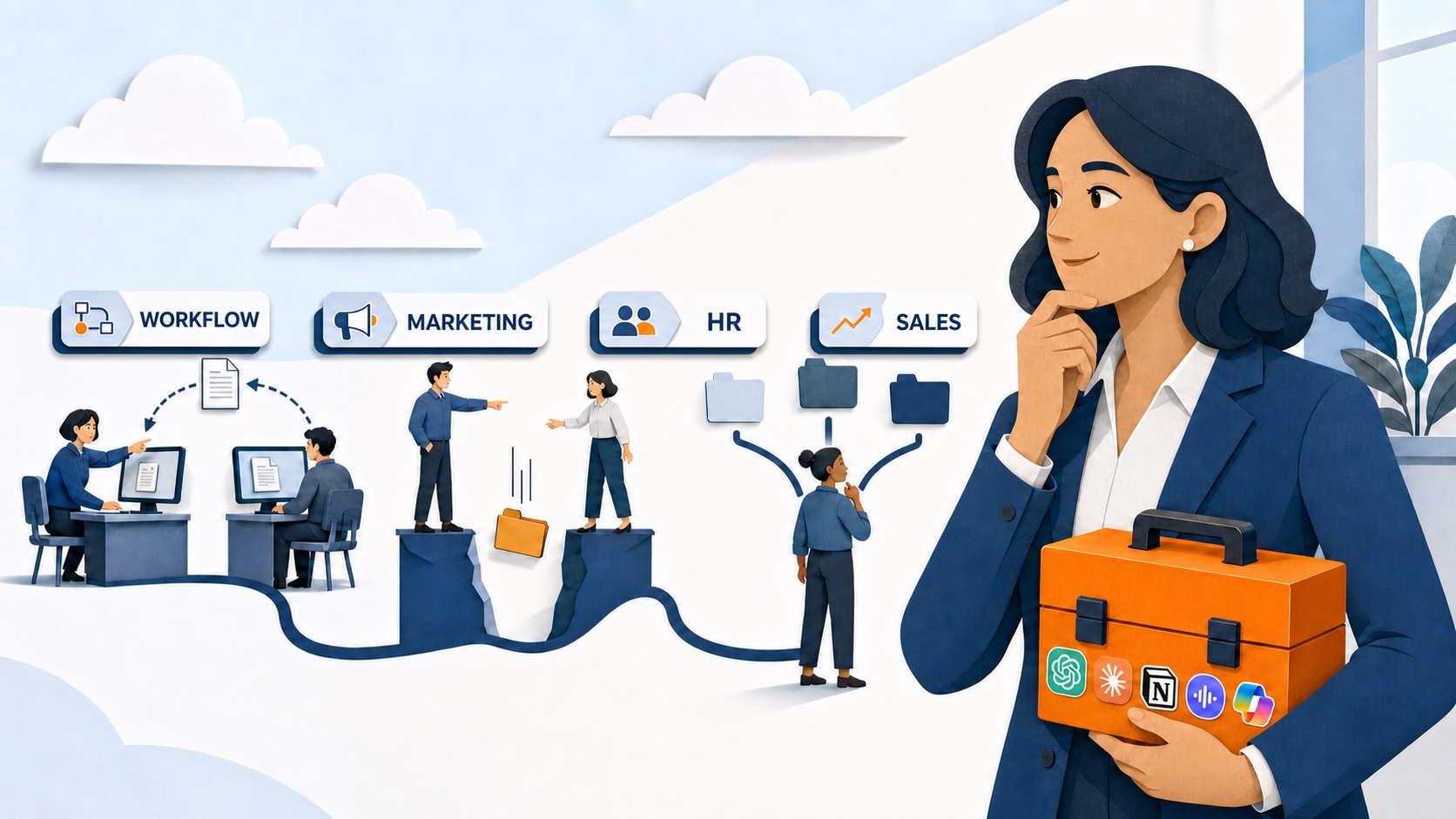
Your first step should be getting the team on the same page about how AI works, where it fails, and what it can do beyond search and content generation. In practice, that means identifying which workflows are worth changing, which tools fit the work, and where to put guardrails in place before you spend money and assign people.
When I ask people in our AI introduction workshops how they use AI, I hear a wide range of answers: writing emails, searching for information, researching a topic, and brainstorming. These are logical starting points. They are also a small part of what AI can do across an organization.
I saw this clearly in the first session of our curriculum with a professional services firm. The owner knew employees were using AI but did not know how they used it personally or inside the company. The employees did not know what their coworkers were doing either. Most were experimenting through personal ChatGPT accounts.
Is that a problem? In some ways, yes. But calling it a problem misses the bigger point. The hardest part of any technology shift is getting people curious enough to try. That part was already done. Employees were experimenting on their own time, unpaid and unasked. What the business was missing was not interest. It was guidance. Every lesson an employee learned stayed in a personal account instead of becoming something the company could build on.
The problem side is real. Nobody disclosed using AI with sensitive company or client information. But there were no guardrails in place to make that assumption reliable. No approved tools. No shared expectations about what information belonged inside them. No process for checking the output or documenting something useful an employee discovered.
There was another gap. People generally trusted the answers because they did not understand how the system produced them, how models differ, or how much the quality of an answer depends on the context you give it. And they underestimated what the technology could do beyond answering a question in a chat window.
They trusted it too much in the places that required caution and expected too little in the places where it could improve the business.
And in almost every session, there are one or two people who have not touched it at all. Not out of ignorance. Some do not trust the output. Some are uneasy about what it means for their job. Some have real concerns about the environmental cost of running these systems. The session does not argue anyone out of those concerns. It gives people enough grounding to weigh them with real information instead of secondhand opinions.
We spent years teaching people to be careful about what they typed into websites. Then the website started talking back.
This is why a shared playbook comes first.
That does not mean everyone becomes an AI expert or uses the same model. It means employees share a practical understanding of how AI produces answers, why those answers need review, what information should remain outside consumer tools, and how AI can connect with the systems the company already uses. Building that foundation is a four-hour working session, not a months-long transformation.
Once that foundation exists, the conversation changes. Employees begin identifying actual workflows instead of suggesting tools. They know which approvals slow everything down. They know which reports require information from three systems. They know which process works only because one person remembers all the exceptions. They point to the report assembled manually every Friday, the client questions answered repeatedly, and the social media accounts that go quiet every time the business gets busy.
The owner no longer has to invent every use case alone. Employees surface the places where AI could help because they understand both the work and what the technology can do.
There is a benefit for employees too. This is career development, not compliance training. The company gives people time and practical skills instead of expecting them to figure everything out after work. Employees also get a voice in how AI affects their jobs and which changes would genuinely help.
The owner still decides which ideas fit the company's strategy, budget, risk tolerance, and priorities. But those decisions are now based on how work actually happens.
The curiosity is already in the building. The sequence matters: build shared understanding, identify workflows, prioritize them, and only then decide what to buy, connect, or build.
If you are hearing more AI noise than direction, start with your team in one room. Book a 15 minute intro call.